
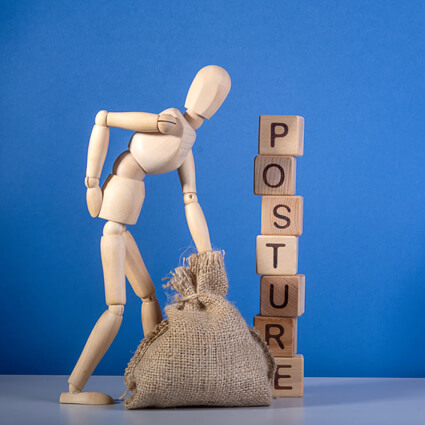
Growing up, you may have been told to sit up straight. Most people think good posture means sitting perfectly straight, shoulders back and chin tucked, held rigid for eight hours a day. That’s not just unrealistic, it’s not even the point. Posture isn’t a pose you hold. It’s influenced by movement habits, muscle balance, and the way your nervous system coordinates your body.
The real problem isn’t slouching for five minutes. It’s staying in any single position for hours without variation, which is exactly what work-from-home setups, long commutes, and hours of phone scrolling tend to create.
“People come in thinking they need to sit up straighter. What they actually need is a body that can move freely and hold itself up without effort. That’s a nervous system issue as much as a muscle one.” — Dr. Marcus Dunn
Here’s what that looks like in the three places most people spend the majority of their day.
Work-From-Home Posture
Set your monitor at eye level so you’re not tilting your head down for hours (a stack of books works fine if you don’t have a riser). More important than any single adjustment, though, is movement. Stand up, stretch, or walk for a minute or two every 30 minutes. Your spine needs variety more than it needs a perfect setup.
Driving Posture
Sit close enough to the wheel that you’re not reaching or rounding your upper back to grip it. Your headrest should sit close to the back of your head, not several inches away, so it can actually support you if needed. Long drives deserve the same rule as desk work: stop and move when you can.
Phone Posture
“Text neck” happens when you tilt your head forward and down for extended periods, and the load placed on your neck increases the farther forward your head moves. Bring the phone up closer to eye level instead of dropping your chin to it, and give your neck regular breaks from looking down.
Three Simple Exercises
- Chin tucks – Gently draw your chin straight back (not down) to counter forward head posture. Do 10 reps a few times a day.
- Doorway chest stretch – Place your forearm on a doorframe and lean forward slightly to open up tight chest muscles that pull your shoulders forward.
- Wall angels – Stand with your back against a wall and slide your arms up and down like a snow angel, keeping contact with the wall to retrain shoulder and upper back position.
How Chiropractic Care Fits In
Poor posture can sometimes be associated with restricted movement in the spine, not just weak muscles. Dr. Dunn uses the Activator Method® to identify and gently address those restrictions (no cracking or twisting involved), helping improve spinal movement and mobility so your body can move more comfortably. A post-check after every adjustment helps confirm whether the intended correction was achieved.
Good posture is about giving your body the freedom to move well. To schedule a posture evaluation, contact Dunn Chiropractic in Charlotte today.